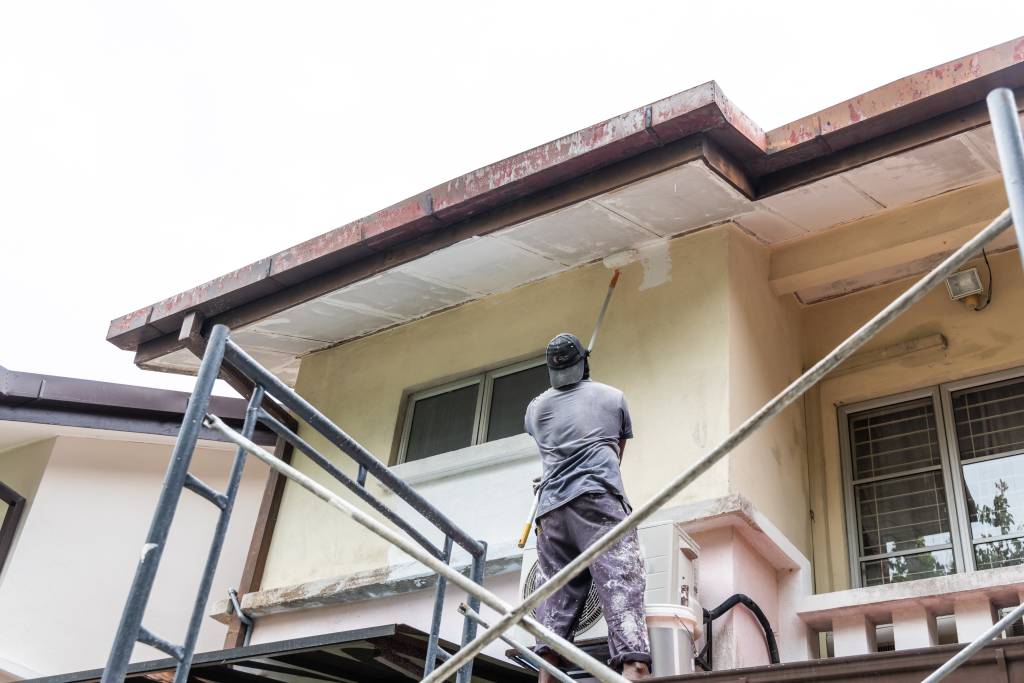
Siding, trim, fascia and doors painted to protect your home from the Texas sun.
Exterior painting for both residential and commercial properties is an essential aspect of maintenance and aesthetics. It not only enhances the visual appeal of a property but also protects surfaces from the elements, thereby extending the life of the structure. Whether for a home or a business, the process of exterior painting involves preparation, technique, and attention to detail to ensure that the final result is both beautiful and durable. Here’s a breakdown of how exterior painting is done for both residential and commercial properties:
Preparation is key when painting the exterior of any property. The first step is to conduct a thorough inspection of the surfaces that will be painted. This helps in identifying areas that need repair, such as cracked siding, peeling paint, or damaged wood. In residential properties, homeowners should inspect areas like window frames, doors, trim, and fences. In commercial properties, additional focus is given to larger surfaces like walls, storefronts, and signage.
Selecting the right type of paint is crucial to the longevity and appearance of the exterior finish. Residential and commercial properties may require different types of paint depending on the materials of the surfaces being painted and the local climate.
Priming is an important step in exterior painting, particularly for surfaces that have not been painted before or have been heavily repaired. The primer helps the paint adhere better and ensures a more even finish. Primers are especially important for wood, metal, or masonry surfaces that are prone to moisture or corrosion.
For residential properties, a primer is typically applied after all repairs and cleaning have been completed. For commercial properties, primers are often used for large metal structures or in areas where the paint will be exposed to harsh environmental conditions.
Once the surfaces are prepared, the next step is painting. This is where the artistry of exterior painting comes into play. Professional painters use brushes, rollers, or spray equipment to apply the paint, depending on the size of the area and the type of surface.
After the paint has dried, the final details come into play. This includes touching up areas that may have been missed, cleaning up any paint drips or spills, and removing any masking tape from windows or trim. For commercial buildings, this might include adding logos or signage that complement the paint job.
The final step is to maintain the paint job. Both residential and commercial properties need periodic inspections to ensure that the paint is holding up. Regular cleaning, touch-ups, and repainting every few years are essential for keeping the exterior looking fresh and protecting the property from damage.
In conclusion, exterior painting is a comprehensive process that requires careful preparation, selecting the right materials, and executing the job with precision. Whether for a residential home or a commercial building, the goal is to enhance the property’s curb appeal while ensuring durability and protection from the elements. By following these steps, the result will not only look great but will stand the test of time.
No pressure, no obligation.
Had the best experience with this company and did an excellent job in remodeling. Definitely recommend them!
Yazmine PerezThey replaced the drywall in my garage, then sanded, primed and painted it, plus the door. All for a very reasonable price. I couldn't be more satisfied with the finished product.
Doris WoolenSsay Painting did a wonderful job fixing my drywall so the texture and paint match. The job was very clean and professional. I would definitely recommend them.
Manuel PerezFree, no-obligation estimates across Dallas–Fort Worth.